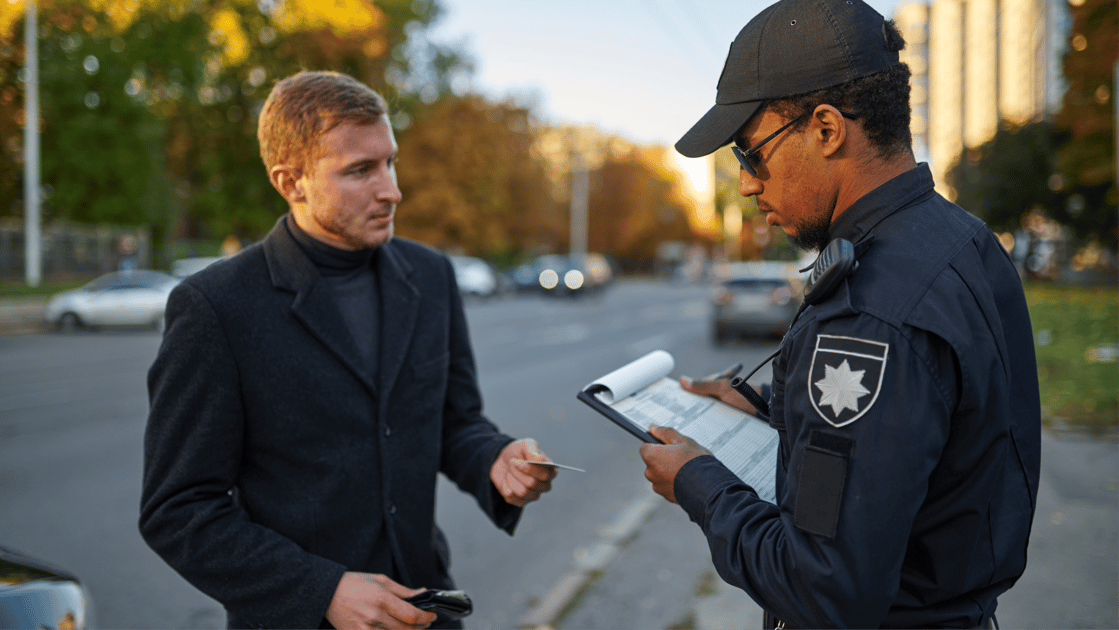
You're driving home from a dispensary with legally purchased cannabis in your car. Blue lights appear in your rearview mirror. The first thought that crosses most patients' minds is whether the officer already knows.
It's a fair question, and the answer matters. Can police see your medical marijuana card status during a routine traffic stop? Is a medical card in police database systems that officers check on the spot? Is your information sitting in some database that gets pulled up the moment an officer runs your plates?
The short answer is no, but there's more to it than that. Here's what actually happens, what your rights are, and what to do if you're ever in that situation.
How Medical Marijuana Registries Actually Work
State medical marijuana programs are run by health departments, not law enforcement agencies. These are secure, separate database systems that track registered patients, caregivers, certifying physicians, and in some states, dispensary transaction history.
The information stored typically includes your name, patient ID number, certification dates, qualifying condition, and possession limits. What it is not is a public record. Medical marijuana registries are considered confidential health information under state law and are not subject to public records requests or general disclosure.
Critically, these databases are entirely separate from driver's license systems, vehicle registration records, and general law enforcement databases. They don't feed into each other automatically.
Accessing registry information requires specific login credentials, a documented legal justification, and, in most states, creates an audit trail recording exactly who looked up what and when. That's not the kind of casual lookup an officer can do during a routine traffic stop.
Can Police See Your Medical Card During a Traffic Stop?
When an officer runs your driver's license during a routine stop, the system queries DMV records only. It checks for outstanding warrants, license validity, registration status, and insurance. It does not connect to medical marijuana registries.
Running your license plates gives similar information: warrants, insurance, and registration. There is no automatic flag, no notification, and no alert that a vehicle's owner or driver holds a medical marijuana card.
The only ways an officer learns about your medical marijuana status during a traffic stop are:
- You choose to mention it or voluntarily show your card
- Cannabis products are visible in the vehicle
- The officer detects the smell of cannabis
- The officer develops probable cause related to a suspected cannabis violation and separately requests registry verification through the appropriate legal channels
In normal circumstances, during a standard traffic stop for something like a broken taillight or a speeding ticket, the officer has no idea whether you're a registered medical marijuana patient. That information isn't available to them without a specific process in place.
Do Cops Know if You Have a Medical Card? State-by-State Reality
Do cops know if you have a medical card automatically when they pull you over? The short answer is no, and the specific rules around when and how law enforcement can access patient registries vary significantly by state. The following reflects state laws as of early 2026; verify current statutes in your state, as these provisions are subject to legislative change.
Missouri has constitutional protection built in. The state constitution explicitly declares patient data confidential, with law enforcement permitted to view information only as necessary to confirm registration status.
Pennsylvania allows access specifically for the purpose of enforcing the Medical Marijuana Act. Officers must log in with credentials, and all searches are recorded in the system.
Florida permits law enforcement access solely for verification purposes, either when a patient presents their card voluntarily or during specific investigations related to cannabis violations.
California operates a voluntary identification card program. Officers cannot assume someone is a registered patient unless a card is voluntarily shown.
New Jersey goes further, with state law prohibiting law enforcement from using registry information as the basis for conducting searches of persons or vehicles.
Oklahoma allows patients to request audit logs showing when law enforcement accessed their registry information, giving patients direct transparency into who has looked at their records.
Arizona permits officers to verify visiting patient status, but does not open the registry for general law enforcement searches.
The common thread across all of these: accessing medical marijuana registry information requires legal justification. It's not something that happens automatically during a traffic stop.
HIPAA and Medical Marijuana: Understanding the Limits
Many patients assume HIPAA automatically protects their medical marijuana status. Understanding HIPAA medical marijuana card protections requires knowing where federal law ends, and state law picks up, and the reality is more nuanced than most people expect.
Since cannabis remains classified as Schedule I under federal law (a status that may change as rescheduling discussions continue), the federal Health Insurance Portability and Accountability Act may not apply to state cannabis registries in the way patients expect. HIPAA governs federally recognized healthcare information. State cannabis registries exist in a legal gray zone at the federal level.
What actually protects patients is state-level privacy legislation. Most states have built their own confidentiality requirements into their medical marijuana programs specifically because federal HIPAA protection is uncertain.
A few important distinctions:
Your communications with your certifying physician about your qualifying condition are protected under standard medical privacy laws. Your dispensary purchase records are subject to state privacy requirements and typically require a warrant for law enforcement to access.
Your medical marijuana status does not appear in employment background checks. Insurance companies cannot access state registries, and since medical cannabis isn't covered by insurance, no claims records are created.
The Plain Smell Doctrine: A Key Area of Ongoing Change
One area where medical cardholders often have questions is what happens when an officer smells cannabis during a stop.
Traditionally, the smell of marijuana alone was considered probable cause for a vehicle search in most states. As legalization spreads, that's been changing.
As of early 2026, states including Virginia, Maryland, Minnesota, Michigan, Massachusetts, and Vermont have seen courts rule that the smell of cannabis alone is no longer sufficient probable cause for a vehicle search, particularly given that possession may be legal.
States including Florida and Wisconsin still largely allow searches based on cannabis odor even where medical marijuana is legal.
Some states, like Illinois, have started differentiating between the smell of burnt cannabis and raw marijuana, applying different probable cause standards to each.
Having a valid medical card may reduce, but does not automatically eliminate, probable cause if an officer detects cannabis during a stop. The legal landscape here is genuinely evolving, and what applies in your state today may be different from a neighboring state or from what applied two years ago.
Common Myths Worth Clearing Up
"My medical card status shows when an officer scans my license." It doesn't. Medical marijuana patient status is not encoded in driver's license barcodes or magnetic strips.
"Police can check my registry status anytime they want." Most states require probable cause, consent, or a warrant before law enforcement can access patient registries.
"HIPAA prevents all police access." HIPAA may not fully apply to cannabis registries given federal illegality, but state privacy laws create their own protections.
"My medical card protects me from a DUI charge." It does not. Medical marijuana patients are subject to the same impaired driving laws as everyone else. A valid card and impaired driving can absolutely coexist from a legal standpoint, and the card won't prevent an arrest based on field sobriety testing or blood results.
"Having a card means police can't search my vehicle." Cannabis odor combined with other factors can still establish probable cause for a vehicle search, depending on your state's current case law, regardless of your patient status.
"Employers can see my card status." Medical marijuana registries are not accessible to employers during background checks or hiring processes.
What to Do During a Traffic Stop with Medical Cannabis
If you're stopped while carrying legally purchased medical cannabis, a few practical guidelines apply.
Keep products in their original dispensary packaging with labels intact. Sealed, labeled containers with batch information clearly visible demonstrate a legal purchase and compliance with regulations.
Storing cannabis in your trunk rather than the passenger compartment reduces the likelihood of odor reaching the officer and shows you're not consuming while driving.
Have your medical card and a matching government-issued ID from the same state accessible, but don't lead with them. Comply with the standard requests first: license, registration, and proof of insurance.
If the officer asks directly whether you have cannabis in the vehicle, answer honestly and identify yourself as a registered medical patient. Present your card and ID at that point.
Do not volunteer that you recently consumed cannabis. Even with a valid medical card, driving while impaired by cannabis is prohibited in every state. There is no medical exception to impaired driving laws.
Know your state's possession limits. Carrying more than the legal maximum creates problems regardless of how valid your card is.
When Your Medical Card Provides Legal Protection
Your medical card works as a legal defense when all of the following are true: you're in the state that issued it, your card is current and not expired, your possession amount is within your state's allowed limits, and products are in their original dispensary containers with labeling intact.
That combination gives you clear legal standing for simple possession. It demonstrates you're a registered patient making a legal purchase within the bounds of your program.
When Your Medical Card Does Not Protect You
There are several situations where your card does not protect at all.
Driving while impaired by cannabis is illegal for medical patients, the same as everyone else. Your card is not a defense to impaired driving charges.
Possessing more than your state's maximum limit remains a criminal offense even for registered patients.
On federal property, including national parks, military bases, and federal buildings, state medical cards carry zero weight. Federal law applies, and your state-issued card is irrelevant.
Most states do not require employers to accommodate medical marijuana use. A positive drug test can still result in termination regardless of card status, particularly in safety-sensitive positions involving commercial driving, healthcare, or heavy machinery.
Under current federal law (18 U.S.C. § 922(g)(3)), cannabis users are prohibited from purchasing or possessing firearms. A medical card does not change this federal prohibition, and cannabis use on federal background check forms (ATF Form 4473) for firearm purchases is a federal offense. Legal challenges to this provision are ongoing in several federal courts.
In multi-state situations, your card only provides legal protection in the state that issued it. If you're stopped in a different state, that state's officer cannot access your home state's registry, and your card won't automatically grant you legal standing unless that state has reciprocity.
Is Your Medical Card Information Truly Private?
Medical marijuana card privacy is built into the system at both the technical and legal levels, and it's worth understanding how that actually works. Health department registry systems are maintained separately from criminal justice databases. There is no automated cross-referencing at a traffic stop. Active registry verification requires separate credentials, a documented reason, and creates a traceable audit log.
Most states track every registry access attempt, recording the officer's identity, the patient searched, the stated reason, the date, and the time. Unauthorized access or searches without a legal basis can result in officer discipline and potential evidence suppression in court proceedings.
In states like Oklahoma, patients can proactively request records showing when and why their registry information was accessed by law enforcement.
The system is genuinely designed with patient privacy in mind, not because law enforcement chose to stay out, but because states built legal and technical barriers specifically to prevent casual access.
How Doctors of Cannabis Can Help
Doctors of Cannabis connects patients with board-certified, state-licensed physicians who take an education-first approach to every evaluation. That means the physician doesn’t just verify your condition; they take time to explain how cannabinoids may relate to your qualifying condition, which delivery methods patients in your situation commonly consider, how to think about usage, and what realistic expectations look like.
Physicians in the Doctors of Cannabis network also review your current medications to identify any potential interactions worth discussing with your care team.
Through our telehealth partner network, patients can complete their evaluation by phone or secure video, whichever works best. Select your state, book your appointment, and speak with a licensed physician at your scheduled time. If you qualify, you’ll receive your certification and guidance on any state registration steps specific to your program. Evaluations are conducted through HIPAA-compliant telehealth; your medical information is not shared with law enforcement databases or public records systems.
Transparent pricing, no surprise fees, and you only pay if approved. Your card is validated at registration, but never charged unless the physician certifies you.
For patients who need help navigating their state’s registration process after their evaluation, Doctors of Cannabis also offers an application assistance program through a dedicated network of experienced cannabis nurses.
Doctors of Cannabis connects patients to licensed physicians through our telehealth partner network. You only pay if approved.
Ready to get started? Book your appointment with Doctors of Cannabis today and speak with a physician who will actually explain your options.
The Bottom Line
Police cannot see your medical marijuana card status during a routine traffic stop. Your patient information lives in a separate health department database that is not connected to the DMV systems officers' access when they run your license or plates. Officers only learn about your medical status if you tell them, if cannabis is visible or detectable in your vehicle, or if they develop specific legal justification to access the registry through a separate process.
State laws vary in how tightly they restrict law enforcement access to patient registries, but the general framework across most states requires probable cause, consent, or a warrant before that information is accessible.
Your card provides meaningful legal protection for possession within your state's limits when your certification is current, your products are properly packaged, and you're not behind the wheel impaired. It doesn't shield you from DUI charges, federal property restrictions, employer drug testing consequences, or possession amounts above your state's legal maximum.
Knowing what your card actually protects and what it doesn't is the most useful thing you can carry alongside it.